This site uses cookies.
Some of these cookies are essential to the operation of the site,
while others help to improve your experience by providing insights into how the site is being used.
For more information, please see the ProZ.com privacy policy.
This person has a SecurePRO™ card. Because this person is not a ProZ.com Plus subscriber, to view his or her SecurePRO™ card you must be a ProZ.com Business member or Plus subscriber.
Affiliations
This person is not affiliated with any business or Blue Board record at ProZ.com.
French to English: Capacity building of communities in their core areas of activity General field: Social Sciences Detailed field: International Org/Dev/Coop
Source text - French Enjeu N°1 : Le nécessaire renforcement des capacités des populations dans leurs domaines d’activités de base
Enjeu N°2 : L’amélioration de la santé des populations en réduisant notamment les maladies liées à l’eau
Enjeu N°3 : La sauvegarde de l’environnement et tout particulièrement des bases de la diversité biologique
5.1 Défis et enjeux majeurs
Enjeu N°1 : Renforcement des capacités des populations dans leurs domaines d’activités de base
S’il est reconnu que les zones humides participent à la conservation de la biodiversité et au maintien des services environnementaux, il n’en demeure pas moins que leur création en constitue une contrainte imposée aux populations à travers la restriction de l’accès aux ressources qu’elles renferment. Jadis, les populations y menaient des activités traditionnelles d’agriculture, d’élevage, de pêche, de ramassage de bois mort, d’artisanat et d’extraction de sel). Ce qui participait à garantir la sécurité alimentaire des populations.
Aujourd’hui, du fait des restrictions que leur impose la protection de ces aires, des dommages et des pertes importantes sont enregistrés en termes économique et alimentaire. A l’analyse, ces pertes à court terme sont compensées à long terme par le classement de la zone et son exploitation rationalisée.
Les dommages causés par la soustraction de l’aire à la libre exploitation des populations sont considérés pour l’essentiel comme une réduction de superficies des terres agricoles, pastorales, des réserves de bois et des zones de pêche.
Ce classement a fait perdre aux populations vivant autour des zones humides des services agricoles, pastoraux et piscicoles. La compensation de ces pertes devrait contribuer à la gestion durable de cette ressource.
D’ailleurs, le législateur avait pris en compte, au moment de leur classement, l’aspect sécurité alimentaire comme en atteste l’article 4 du décret de création de la Réserve spéciale Faune du Ndiael qui indique que « sont reconnus aux collectivités l’exercice des droits d’usage quant au ramassage du bois mort, à la récolte des fruits sauvages, des plantes alimentaires ou médicales, des gommes et résines, de la paille et du miel. Le pâturage, l’émondage des arbres fourragers et le parcours des animaux appartenant à ces collectivités demeurent autorisés. Les éleveurs transhumants pourront s’installer en bordure de la nationale 3 dans une bande ne dépassant pas un kilomètre de largeur ».
Des dommages et des pertes restent aussi liés à l’érection des barrages et le contrôle de l'eau du fleuve dans le cadre des aménagements de l'Organisation pour la Mise en Valeur des Vallées du Sénégal et de la Falémé (OMVS), a fortement réduit les surfaces inondées annuellement dans le Walo (zone d'expansion des cultures de décrue). Les cultures irriguées se développent ainsi au détriment des cultures de décrue (sorgho, patate douce, etc.).
Le principal défi à relever est la réduction des dommages et des pertes causés par la création des aires protégées.
L’orientation stratégique est l’amélioration des services agricoles, pastoraux, sylvicoles et piscicoles autour des zones humides.
Un des axes majeurs du renforcement des capacités devrait être l’élaboration d’une stratégie de communication débouchant sur un plan de communication pour chaque zone humide répertoriée. Celle-ci devrait résoudre le déficit de communication autour de ces écosystèmes qu’on a bien souvent tendance à laisser aux conservateurs.
Enjeu N°2 : Amélioration de la santé et des conditions d’accès à l’eau
Les conditions sanitaires et environnementales dans le bassin du fleuve Sénégal se dégradent du fait des modifications du régime des eaux et de leurs qualités suite aux sécheresses et aux travaux d’endiguement du fleuve Sénégal. Ces modifications ont fait naître dans la zone une véritable problématique de santé environnementale avec une limitation de l’accès des populations à l’eau potable et aussi un développement de maladies liées à l’eau.
Malgré la disponibilité des eaux, l’accès des populations à une alimentation en eau potable reste aujourd’hui une préoccupation majeure. Les eaux de surface (Lampsar, lac de Guiers) sont polluées par les eaux de drainage des périmètres agricoles. Quant aux eaux souterraines du delta du fleuve Sénégal, elles sont en général salées et impropres à la consommation. Il existe quelques petites lentilles d’eau douce flottantes captées par des puits, mais elles finissent rapidement en laissant la place aux eaux salées. Pour la qualité des eaux de boisson, la zone reste marquée par une insuffisance des infrastructures hydrauliques (adduction d’eau, unité de traitement et de potabilisation de l’eau…).
Sur le plan sanitaire, de nombreuses maladies liées à l’eau sont endémiques dans la zone : le paludisme, la bilharziose et les maladies diarrhéiques. A ces éléments de morbidité, s’ajoutent l’insuffisance en infrastructure de santé et d’assainissement, l’insuffisance du personnel de santé qualifié, l’enclavement et le manque d’ambulance pour les évacuations sanitaires. Ces contraintes viennent renforcer la vulnérabilité de l’état de santé des populations locales.
Translation - English Issue No. 1: The necessary capacity building of communities in their core areas of activity
Issue No. 2: Improving people's health by reducing, in particular, water-related diseases
Issue No. 3: Protecting the environment, particularly the foundations of biodiversity
5.1 Key challenges and issues
Issue No. 1: Capacity building of communities in their core areas of activity
While it is recognised that wetlands contribute to the conservation of biodiversity and maintenance of environmental services, the fact remains that their establishment is a constraint imposed upon the communities due to the restriction of access to resources they contain. Formerly, communities practised traditional activities such as agriculture, livestock breeding, fishing, collecting dead wood, handicrafts and salt extraction. This contributed to ensuring the food security of the communities.
Today, due to restrictions which impose the protection of these areas, significant damage and losses have been recorded, both economic, and in terms of food security. On analysis, these short-term losses are offset in the long term by classification of the area and its rational use.
The main damage caused by the withdrawal of the area from the free use of communities is considered to be the reduction of areas of farmland, pastoral land, timber reserves and fishing areas.
This classification has cost the people living around the wetlands agricultural, pastoral and fish resources. Offsetting these losses should contribute to the sustainable management of this resource.
Moreover, the legislator had taken into consideration, at the time of classification, the food security aspect as evidenced by Article 4 of the decree of establishment of the Ndiaël Special Wildlife Reserve which states that “exercising one’s usage rights for the collection of dead wood, harvesting of wild fruit, plants for food or medicine, gums and resins, straw and honey is acknowledged. Grazing, pruning of fodder trees and the grazing areas of animals belonging to these authorities remain allowed. The herders may settle along national highway 3 in a strip no more than one kilometre wide”.
Damage and losses are also related to the erection of dams and control of river water in the context of the works carried out by the Organisation for the Development of the Valleys of Senegal and Falémé (OMVS), which have significantly reduced the area flooded annually in the Walo (expansion zone for recession cultivation). Irrigated crops are also growing at the expense of flood plain crops (sorghum, sweet potatoes, etc.).
The main challenge is the reduction of damage and losses caused by the establishment of protected areas.
The strategic direction is to improve agricultural, pastoral, forestry and fishery services around the wetlands.
The major areas of capacity building should include the development of a communication strategy leading to a communication plan for each listed wetland site. This should solve the lack of communication around these ecosystems which is often left to conservators.
Issue No. 2: Improved health conditions and access to water
The health and environmental conditions in the Senegal River Basin have been degraded due to changes in water regime and water quality following the drought and diking of the Senegal River. These changes have led to a genuine issue of environmental health in the area with access to safe drinking water being limited and also increased rates of water-related diseases.
Despite the availability of water, people's access to a drinking water supply remains a major concern today. Surface waters (Lampsar, Lac de Guiers) are polluted by drainage water from agricultural areas. As regards groundwater in the Senegal River Delta, it is usually salty and unfit for consumption. There are some small floating freshwater lenses captured by wells, but they end up quickly giving way to saltwater. In terms of the quality of drinking water, the area remains marked by a lack of water infrastructure (water supply, water treatment and purification plant).
On the health front, many water-related diseases are endemic in the area: malaria, schistosomiasis and diarrhoea. These causes of morbidity are compounded by the lack of health and sanitation infrastructure, lack of skilled health personnel, limited road access and lack of an ambulance for medical evacuations. These constraints reinforce the vulnerability of local communities’ health.
Spanish to English: Operation to remove tunnelled venous catheters in a dialysis unit. Is it possible to reverse the trend in their growing use? General field: Medical Detailed field: Medical: Instruments
Source text - Spanish Operación retirada de catéteres venosos tunelizados en una unidad de diálisis. ¿Es posible cambiar la tendencia en el uso creciente de éstos?
M.D. Arenas1, T. Malek1, M. López-Collado2, M.T. Gil1, A. Moledous1, A. Morales1, E. Cotilla1,
F. Álvarez-Ude3
1 Servicio de Nefrología. Hospital Perpetuo Socorro. Alicante. 2 Servicio de Cirugía Vascular. Hospital Perpetuo Socorro. Alicante. 3 Servicio de Nefrología. Hospital General de Segovia. Segovia,
M.D. Arenas y cols.Catéteres venosos tunelizados para hemodiálisis
Nefrología 2009;29(4):318-326.
INTRODUCTION
Se acepta de forma generalizada que la FAV es el acceso vascular de elección en la población en hemodiálisis1. Se ha demostrado que el uso de catéteres y prótesis vasculares es un predictor independiente de mortalidad2. El uso de catéteres se asocia, moreover, con un incremento en el riesgo de fallo posterior del acceso vascular ipsilateral3 y conlleva un mayor coste económico4. Nonetheless, y de la proliferación en los últimos años de guías de práctica clínica que desaconsejan su uso, la tendencia creciente en el uso de catéteres es un hecho en la mayoría de los países5, y esa tendencia, lejos de haber disminuido, se mantiene6. En un estudio previo llevado a cabo en nuestra Unidad observamos un aumento en el uso de catéteres permanentes, tanto en pacientes incidentes como prevalentes, y ello a pesar de mantener una política, tanto por parte de los nefrólogos como del cirujano vascular, favorecedora de la creación de accesos vasculares autólogos frente a cualquier otro tipo de acceso vascular. En el año 2000 sólo el 4,2% de nuestros pacientes prevalentes y ninguno de los incidentes se dializaba a través de catéter. However, five years later, in 2005, este porcentaje se incrementó al 21,5% de los pacientes prevalentes y al 23,7% de los pacientes incidentes (p
Translation - English Operation to remove tunnelled venous catheters in a dialysis unit. Is it possible to reverse the trend in their growing use?
M.D. Arenas1, T. Malek1, M. López-Collado2, M.T. Gil1, A. Moledous1, A. Morales1, E. Cotilla1,
F. Álvarez-Ude3
1 Nephrology Department. Perpetuo Socorro Hospital. Alicante. 2 Vascular Surgery Department. Perpetuo Socorro Hospital. Alicante. 3 Nephrology Department. Segovia General Hospital. Segovia,
M.D. Arenas and colleagues. Tunnelled venous catheters for haemodialysis
Nefrología 2009;29(4):318-326.
INTRODUCTION
It is generally accepted that AVF is the preferred vascular access in populations undergoing hemodialysis1. It has been demonstrated that the use of catheters and vascular prostheses is an independent predictor of mortality2. The use of catheters is associated, moreover, with an increase in the risk of posterior failure following ipsilateral vascular access3 and entails a higher economic cost4. Nonetheless, and despite the proliferation in recent years of clinical practice guidelines which advise against its use, the growing trend in the use of catheters is a fact of life in most countries5, and shows no sign of being reduced6. In a previous study carried out in our Unit we observed an increase in the use of permanent catheters, both in incident patients and prevalent patients, in spite of a policy being in place both on behalf of the nephrologists and on behalf of the vascular surgeon, in favour of the implementation of autologous vascular access as opposed to any other type of vascular access. In the year 2000 only 4.2% of our prevalent patients and none of the incident patients were dialysed using a catheter. However, five years later, in 2005, this percentage increased to 21.5% of prevalent patients and to 23.7% of incident patients (p
More
Less
Translation education
Graduate diploma - Institute of Linguists
Experience
Years of experience: 23. Registered at ProZ.com: Jul 2009.
Spanish to English (City University London) Spanish to English (City University London) Spanish to English (City University London) Spanish to English (Chartered Institute of Linguists) Spanish to English (University of Leeds)
French to English (University of Leeds)
More
Less
Memberships
N/A
Software
Adobe Acrobat, Adobe Photoshop, Frontpage, Microsoft Excel, Microsoft Word, Powerpoint, Wordfast
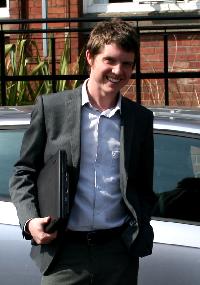
Rapid, reliable document translation service from French to English and from Spanish to English by professional freelance translator, established in 2003, Steve Deegan DipTrans IoLET BA (Hons.)
I have worked in-house for a major UK-based translation company which has an excellent reputation in the Technical Translation sector and is an ISO 9001:2000 registered company.
In 2003 I graduated with a BA Joint Honours degree in French & Spanish (2:1) from the University of Leeds, subsequently undertaking postgraduate studies in Translation at City University, London (2007).
Since then I have been awarded with the prestigious Institute of Linguists Educational Trust Diploma in Translation, specialising in Science and Technology.
DIGOtranslation understands your needs for accuracy. A translator must not only have excellent linguistic skills in his/her foreign languages, but have a comprehensive understanding and unsurpassed command of his own native tongue.
Having worked as an in-house Translation Quality Checker, I am aware of the industry’s stringent requirements and therefore all of my translated documents are subject to a rigorous quality control procedure.
Some examples of documents handled by DIGO Translation:
- Scientific articles and research
- Medical records
- Patient information leaflets
- Business correspondence
- Technical manuals
- Proposals, reports
- Product specifications
- Tourism brochures
- Advertising and marketing material
- Company annual reports
- Project documents
- Newspaper articles
- Powerpoint presentations
Keywords: quality translation services, quality spanish translation, quality french translation, spanish translation, french translation, freelance translator, high quality technical translation, high quality scientific translation, freelance translator, scientific translation


 Expertise